Proafile v5.0 | Updated: Jul 28, 2010

Proa Rig Comparisons

Posted by on 05/23 at 01:32 PM

From the Proafile Archives. Originally published 2001.

Below is a list of proa rigs under active development today. As you can see, there is hardly a consensus as of yet! None of the rigs are perfect, and all have various strengths and weaknesses. The Rig Ratings Table is a first attempt to quantify three rig performance areas: Performance, Handling, and Safety. The table is the result of some spirited discussion on the subject by the Proa File International mailing list. Many thanks to all who participated.
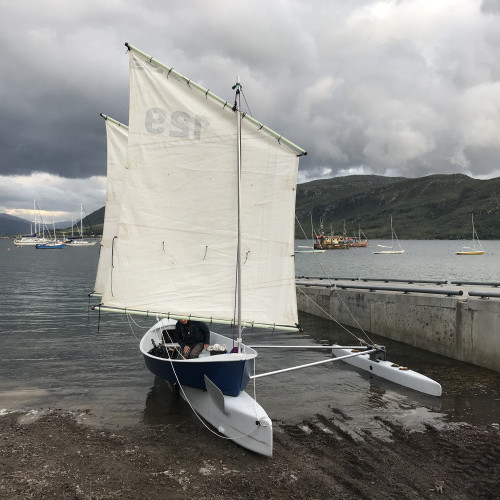
Oceanic Rigs
Western Rigs
Other Approaches

Proa Rig Ratings Table

1-5, 5 = Best
Oceanic Rigs (forward CE)
Western Rigs (aft CE)
Others
 
CrabClaw
Gibbons
Staysail
Sloop
Balestron
Schooner
Bolger
Kite
Performance
Windward Efficiency - L/D 3 5 4 5 4 3 5 3
Off Wind Power - Cx Max 5 4 2 2 4 4 4 5
Heeling Moment 5 4 3 3 3 4 3 5
Fore/Aft Adjustable CE? yes yes partial no no yes no yes
Aerodynamic Lifting Rig? yes yes yes no no no no YES!
Aerodynamic Balance? no no no no yes no yes yes
Performance Total 13 13 9 10 11 11 12 13
Handling
Ease of Shunting 2 5 3 2 5 3 1 5
Speed of Shunting 2 4 3 1 4 3 5 5
Ease of Trimming/Sailing 4 4 2 3 5 3 1 1
Ease of Furling/Getting Underway 4 4 5 3 3 2 5 1
Ease of Reefing/depowering
4 1 2 3 3 4 5 1
Back-wind Recovery
2 2 3 3 5 5 1 5
Tacking Ability? no no yes yes yes yes no yes
Handling Total 18 20 18 15 25 20 18 18
Storm Safety
Low Reefed CE? 4 2 3 4 4 5 4 5
Centered CE When Reefed? 3 5 3 4 5 5 5 5
No. of Critical Parts 4 4 3 2 5 3 3 3
Windage - Bare Poles 4 3 2 2 3 2 2 5
Storm Safety Total 15 14 11 12 17 15 14 18

Conclusions:

To draw broad conclusions is dangerous, since the list is really just a distillation of many people's subjective opinions on their experiences with the various rigs, but I'm going to dive in anyway...

  • The Oceanic rigs generally deliver more performance than the Western rigs, in the ways that are important to proas.
  • The Oceanic rigs all have aft-sloping luffs, which helps promote aerodynamic lift, and vortex lift on reaches.
  • The Western rigs are easier to handle, the balestron being exceptionally so.
  • The sloop is exceptionally slow to shunt, since the jib must be lowered on one end, then its duplicate raised on the other. Other sloops have used roller-furling jibs in place of the hanked on jibs of Russell Brown's proas. These sloops would rate a bit higher in Handling, especially in Ease and Speed of Shunting, but would rate lower in Performance.
  • Western rigs are more tolerant of back-winding, and most are able to tack as well as shunt. This is no surprise, since the Western rigs are adopted from tacking boats. I am not certain that tacking ability is really an important feature once we become more familiar with proa sailing, but in a Western, tacking world, it would always come in handy.
  • The Oceanic rigs tend to have shorter masts, simpler rigging, and drop the other spars to the deck, so they have less windage under bare poles. The exception is the shunting staysail, but that is really a Western rig that happens to place its CE forward of amidships.
  • The Western rigs have reefing figured out, the Oceanic rigs less so. In fact, so far the Gibbons rig cannot be reefed, and the traditional crab claw never had reef points! See the crab claw page for the crab claw alternatives to reefing.
  • Both rigs in the "Other" category show great promise, however they each still exhibit daunting handling problems. The Bolger rig is also known as the AYRS sail, and was actively experimented with by the AYRS during the 60's. They eventually gave up trying to tame it. The kite rig shows perhaps the most promise of any rig, and not just for proas.

Notes:

Crab claw is based upon work by C.A. Marchaj, Gary Dierking, John Dalziel, and Michael Schacht.
Gibbons rig is based upon the development work of Gary Dierking with Tarawa.
Staysail is based upon the design of Doug Taylor.
Sloop is based upon the designs of Russell Brown.
Balestron rig is based upon the development work of Rob Denney.
Schooner is based upon the design of Cheers, the Atlantic proa by Richard Newick.
Bolger rig is based upon experiments done by John Dalziel and Dieter Schulz.
Kite rig is based upon the ongoing development of Dave Culp.

Comments

  • Hi,

    I’m brand new to proas, and am completely fascinated.  I looked around for a forum and didn’t find anything here, so I don’t know where else to ask...but what does being “caught aback” and “back-winding” mean?

    Thanks,
    Phil

    Posted by  on  08/23  at  10:59 AM
  • On a traditionally rigged proa, the wind must always come from the windward side. If the wind is accidentally allowed to come from the leeward side, the proa is said to be “caught aback”. If that happens, the boom and sail are pressed against the mast, which might cause the rig to collapse.

    FYI, square rigged vessels may also be back winded, or caught aback.

    Posted by  on  08/25  at  05:46 PM

Post a New Comment

Commenting is not available in this weblog entry.